

If we want real connection, we have to stop pretending our generic segmentations are anything but shortcuts. We slice people up by what’s available—age, income, gender, channel, how they transact, etc.
But the minute we start grouping by these surface traits, we’ve injected bias. And not just demographic bias, behavioral bias. We’re assuming the thing we’ve grouped on actually matters to why someone gives and it usually doesn’t.
Which of these pairs belongs together? We instinctively, instantly “see” fit based on exactly that, what we see. But what if the young black woman and the old white man both adopted animals from the same shelter? What if they’re both caregivers to someone with cancer? What if they both think of themselves as climate activists?
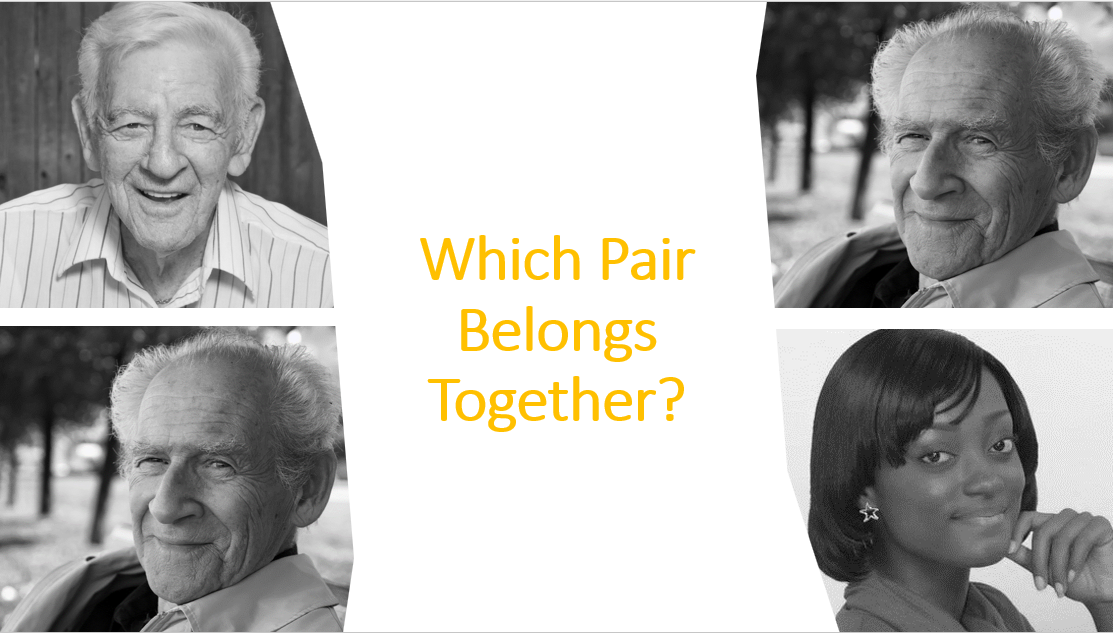
That shared “why” is what matters, not their age, channel or gift size. The shared, instrinsic why is Identity.
- Identities are contextually and automatically activated.
- Each identity comes with its own values, goals, and behavioral “settings.”
- When an identity is activated, people make choices to reinforce it.
We are what we choose.
Giving is identity-expressive, which means the fundraiser’s job is to recognize and reflect back the identity that matters most to the person on the other side of the ask.
It’s not just messaging, it’s segmentation, journey, cadence, channel, and ask—all built around who the donor believes themselves to be.
The traditional “active/lapsed/reactivated” donor journey isn’t just lazy, it’s backward. It focuses on what we think about them based on their usefulness to our goals.
An identity-led journey, on the other hand, starts with who they are and why they act and builds from there. You don’t drop someone from a caregiver journey just because they didn’t give in 180 days. That’s not how identity works, people don’t stop being who they are on your timeline.
And if you’re looking for the kind of model that makes this actionable—not just philosophical—yes, it exists and some of the folks at DonorVoice would be happy to have a conversation with you.
The future is here, it just isn’t evenly distributed.
Kevin
