Award-Winning Blog


Don’t Blame It On the Election

The fundraising report arrives.  Revenue is below budget and new donors are scarce. Someone at the board meeting clears his throat. “It’s the election.” Heads nod, shoulders drop as folks relax. There it is: the explanation that asks nothing more of anyone.  Apparently, the candidates have vacuumed up every available dollar, leaving your food pantry, […]

Learn More

Please Give Immediately. We’re Trying to Grow.

The Volume Machine of fundraising has developed a remarkably efficient way to make a large potential market look tiny: require everyone in it to be ready to donate before we agree they belong there. Then call whoever survives “the prospect universe.” That universe may be only a small sliver of the people whose values, identity […]

Learn More

Have we made ignoring the appeal effortless?

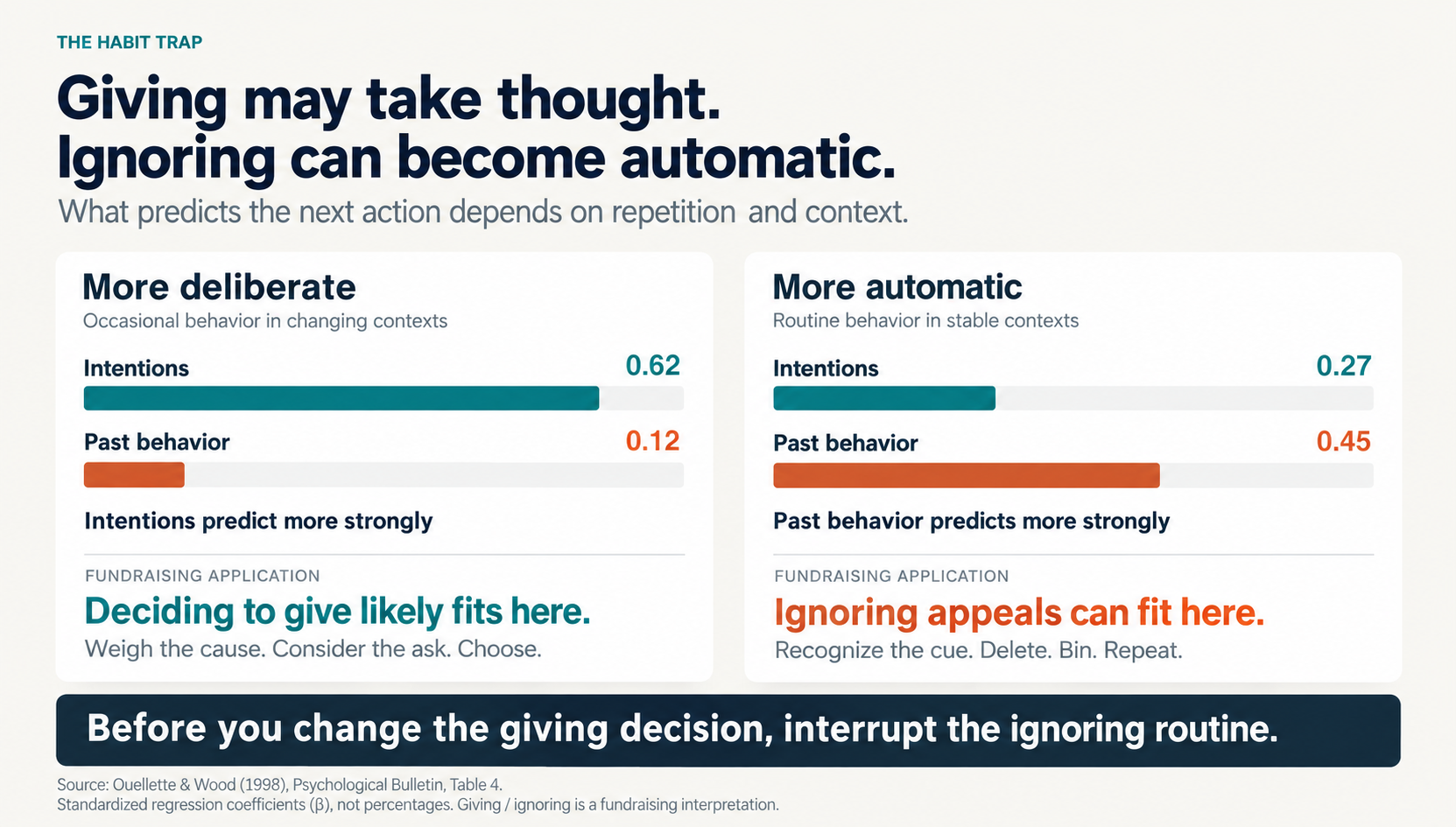
Past giving predicts future giving. That’s useful for deciding whom to ask, but it becomes circular when we mistake prediction for understanding. For this reason, I used to dismiss behavior beyond its predictive value but I overlooked an important mechanism: repetition in a familiar setting can make a response automatic. The chart shows why this […]

Learn More

BEFORE YOU FINISH YOUR 2027 FUNDRAISING PLAN…

It’s that wonderful time of year again.  Somewhere, at this very moment,  amid the year-end scramble a fundraiser is opening the 2026 fundraising plan, changing the dates to 2027, adding 5% to the revenue goal, 7% to expenses, sprinkling some AI on top, and calling it strategic planning. Don’t.  The ground underneath fundraising is moving […]

Learn More

Did You Choose For the Donor?

When was the last time you felt good about being lightly manipulated or guilted into something? Behavioral economics 101 emphasizes the power of defaults in steering behavior. Just check the box, circle, or highlight the option you want people to choose, and place it in the middle. These defaults are better described as choice robbers. […]

Learn More

Five Cents for the Name. A Year to Find Out.

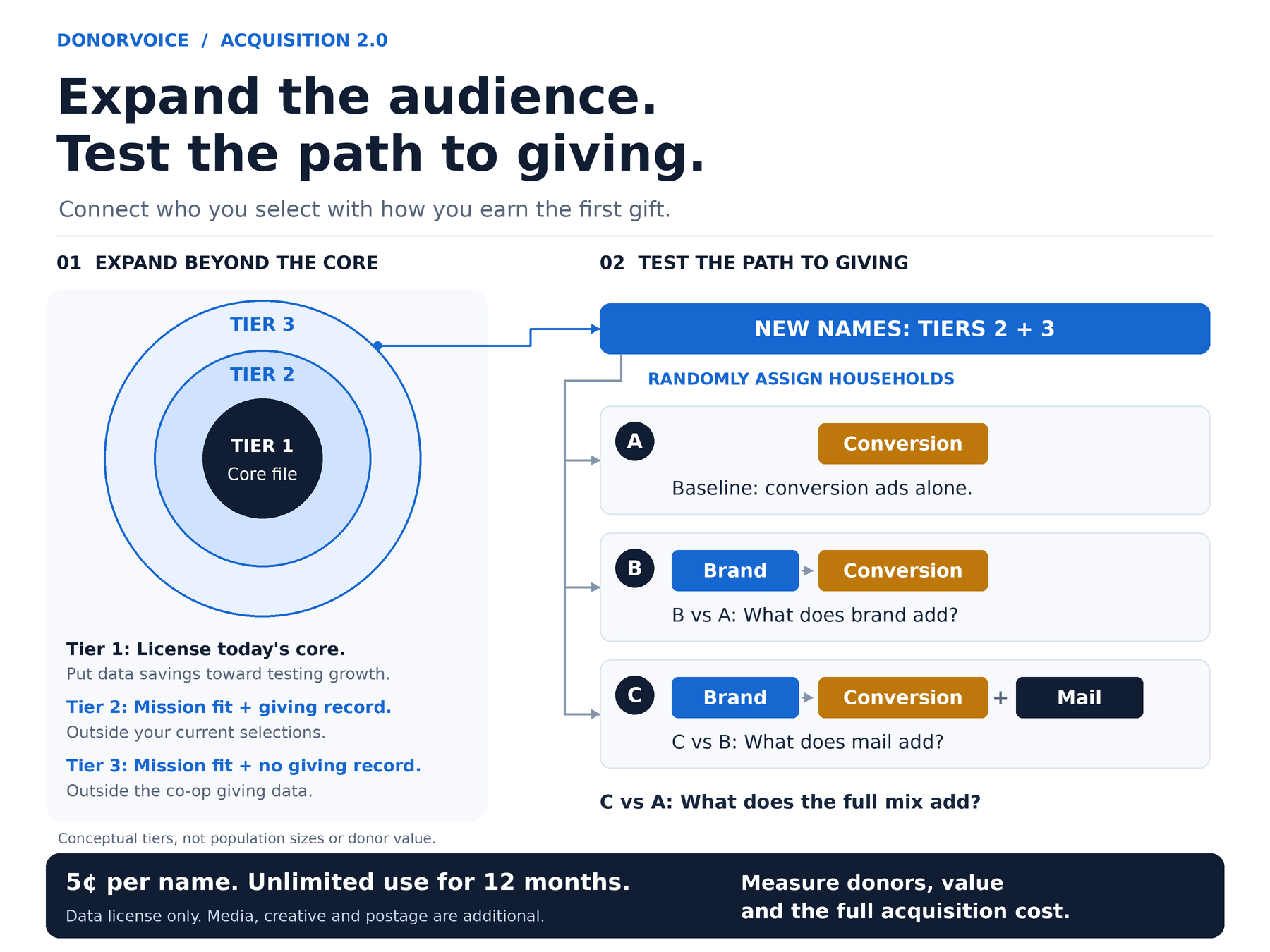
The acquisition model you rent names from is good at predicting response and lousy at growth. Co-op models start with recorded giving and rank people for near-term response. That supplies a useful but small and shrinking responder pool.  And what about people with mission fit and no giving record?  Never seen and therefore, never served […]

Learn More