

Do You Have a Plan B for Your Payment Platform?
Here’s a question worth asking at your next staff meeting right after the digital guru finishes bragging about the online revenue numbers: if ActBlue stopped processing your donations tomorrow morning, what exactly would you do?
Not what would you do next quarter, once someone convenes a task force. Not after the emergency call where somebody from IT says they’re “looking into it.” Tomorrow morning. Could you put up another donation page, run another credit card, keep your monthly donors giving? Could you get money out of a stranger’s wallet and into your bank account without ActBlue standing in the middle of the transaction, the way it stands in the middle of hundreds of thousands of transactions in this business? If the honest answer is no, what you’ve built isn’t a fundraising system. It’s a dependency, and it’s the kind of thing that ought to keep a person up at night.
This Isn’t an Obituary
Let’s get one thing straight before the alarmists start drafting subject lines. ActBlue is very much alive, processing enormous sums of money, and nobody sane is suggesting Donald Trump and his enablers are about to reach over and unplug the server at midnight even though they’d love to. But saying a company like Act Blue isn’t about to disappear is a different claim than saying you shouldn’t prepare for the day it stumbles.
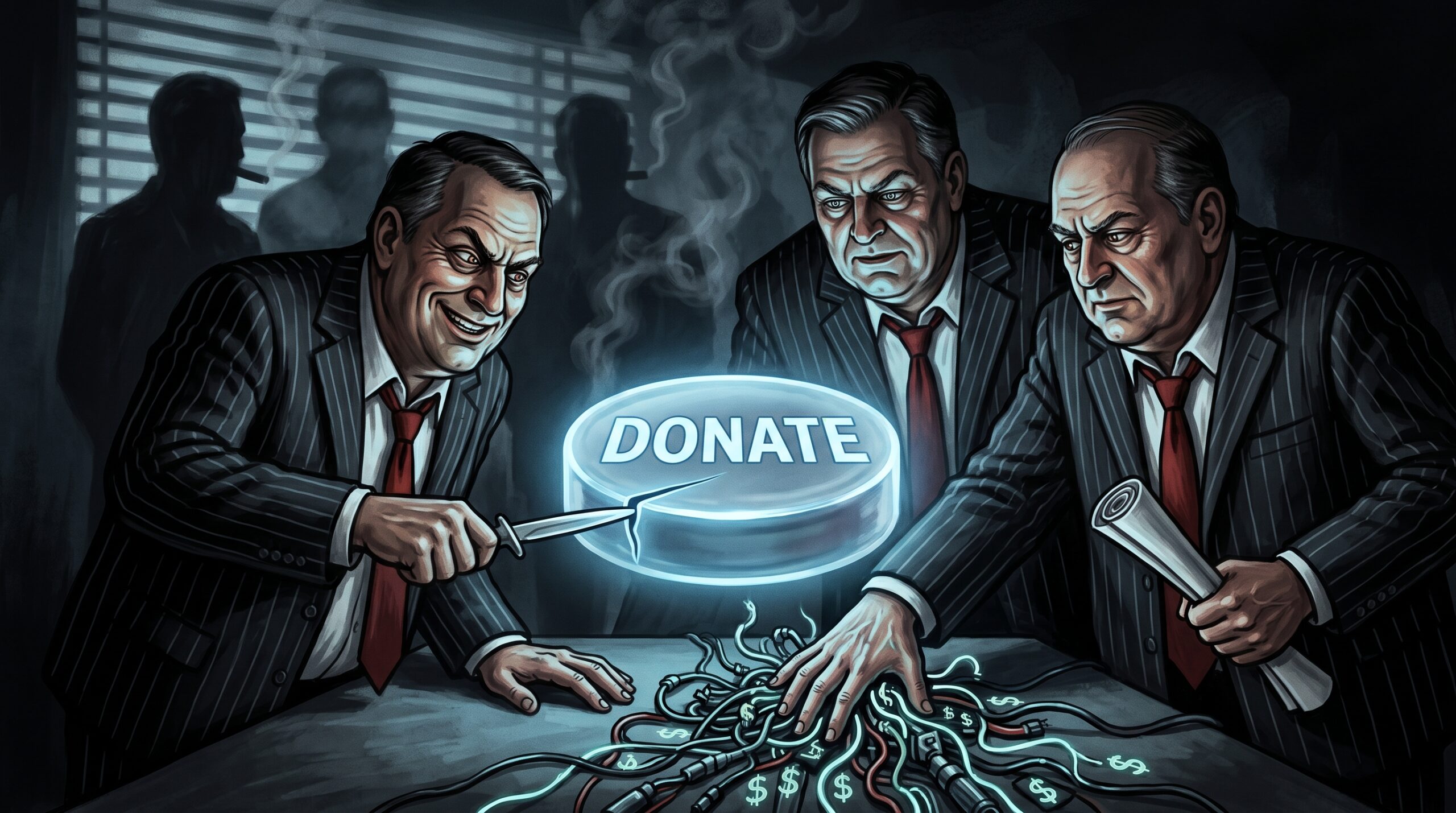
CNN just gave the sector a fairly unglamorous look under the hood: more than 20,000 campaigns and organizations run their contributions through ActBlue, which says it has processed more than $19 billion since 2004. That’s not a vendor relationship. That’s the major circulatory system of progressive politics running through one artery.
One Democratic strategist told CNN, with the kind of understatement that makes you wince, that the ecosystem has built itself a vendor that’s “too big to fail” — the same phrase Washington used for the banks in 2008, right before taxpayers had to bail them out because nobody in the system had a backup plan. “Too big to fail” institutions don’t fail safely, they fail catastrophically, precisely because no one built a Plan B.
The Threat Isn’t a Fever Dream
None of this is imaginary. Trump ordered the Justice Department to investigate ActBlue, and CNN reports the investigation is still open. Republican congressional committees have run their own inquiries alongside it. And to complicate a story that would otherwise write itself as a simple morality play, ActBlue’s own former outside counsel raised questions about how the platform screened certain foreign-address contributions and about what it told Congress about them. ActBlue disputes that it misled lawmakers and says it has since tightened its safeguards. Nobody there has been charged with anything.
But notice what doesn’t have to be true for organizations using ActBlue to have a problem. ActBlue doesn’t have to be guilty of anything. It doesn’t even have to shut down. A subpoena creates disruption. A banking hiccup creates disruption. A compliance fight, a technical failure, a user-confidence wobble stoked by a hostile administration — all of it creates disruption, and disruption in October of an election year like this behaves nothing like disruption in February, when nobody’s paying attention and there’s time to fix it quietly.
Some candidates and organizations have gotten the message already and are standing up backup systems in case ActBlue takes a hit before November. Fine for them. What about the 501(c)(3) down the street that’s never once run a fire drill?
One Platform, Two Tax Codes
Remember that “ActBlue” isn’t just political campaign money. ActBlue Civics serves the (c)(4) advocacy world, ActBlue Charities serves the (c)(3) world, and to the donor swiping a card at 11pm, it’s all one seamless machine — which is exactly why it got so powerful, and exactly why it’s worth asking whether the sector built itself a major point of failure and called it leading-edge infrastructure.
The Agitator’s spent decades urging folks not to lean too heavily on a few major gifts, not to build a program around a few list sources or one acquisition channel. Perhaps now’s the time to not depend on one payment platform either, no matter how good it’s gotten at getting people to give.
So, What’s Plan B?
For nonprofits, I’ve found one platform worth a serious look is Fundraise Up. I’m not telling you to look at it like a kitchen appliance everyone suddenly has to own because a neighbor got one. I’m merely suggestion you explore and test an alternative before the day you need a new payment processor don’t have the luxury of testing anything.
I wrote about Fundraise Up last year after sitting through a demo that changed how I thought about checkout, and the idea behind it wasn’t especially exotic. It was the thing Amazon and Apple figured out years ago: you should not make it hard for a person to hand you money.
Too many nonprofits have made a religion out of doing exactly the opposite. Mobile accounts for an enormous share of web traffic, and nonprofit revenue on mobile still lags the commercial world badly, because too many donation platforms make people type, scroll, hunt for a card number, and eventually give up. Fundraise Up goes after that friction directly — mobile-first checkout, digital wallets, adaptive ask amounts, a shorter distance between “yes, I want to help” and “gift completed.”
One number stuck with me in the performance data Fundraise Up showed me. The San Francisco SPCA’s monthly donor count reportedly climbed from around 400 to more than 1,000 after it switched platforms, with 42 percent of revenue arriving via mobile and a meaningful chunk of that through Apple Pay and Google Pay. That’s one organization’s results, reported by the vendor selling the platform, which means you shouldn’t take my word for it or theirs. Run the test yourself. See what happens to conversion, to recurring giving, to mobile performance, to whether your CRM will even talk to the thing. And see, above all, how long it will take you to turn it on if your primary processor goes dark, because that’s the question that actually matters here. The product isn’t Fundraise Up. The product is redundancy. Pick a different vendor if you want; just make sure you have one.
Build the Lifeboat Before You Hit the Iceberg
CNN closed its story with a Democratic strategist shrugging that donors will adapt — tell them ActBlue is gone, ask them to re-enter their card number, and they will, with maybe a little more friction. Maybe true.
Maybe. Every fundraiser reading this knows exactly what “a little more friction” costs. It’s abandoned carts. It’s lost conversion. It’s recurring gifts that quietly stop recurring. It’s a staff meeting at 4:47 on a Friday where someone discovers the CRM was never built to talk to the backup processor, because nobody thought they’d need one.
Keep using ActBlue if it’s working for you. Defend it against a politically motivated attempt to strangle it, and fight the administration weaponizing the Justice Department against its opponents — that fight is real and it matters.
But do that while you’re also opening a second door, installing a second pipe, testing a second checkout, and knowing exactly who flips the switch and where the donor data goes if you ever have to. And don’t be surprised if the second door turns out to be a better door.
That’s what happened to me when I went looking at Fundraise Up — I wasn’t hunting for a replacement, just a hedge, and I came away thinking the hedge was much better than what I was using. Sometimes the fire drill leads you to a new house.
Having a Plan B isn’t pessimism, it’s competence and preparedness. Neither has ever gone out of style.
So ask yourself again, and answer candidly: if your ActBlue button –or that of any payment platform you’re using — stopped working tomorrow morning, what exactly would you do?
Roger
6 responses to “Do You Have a Plan B for Your Payment Platform?”
Behavioral Science Q & A
Thanks so much for raising this. Yes, capturing donor information can be helpful for stewardship like newsletters, thank-you letters, impact updates. But how you ask matters. Forcing full data capture introduces friction that can significantly depress conversion, many donors may simply abandon the process. Beyond the friction itself, required fields also shift the emotional experience […]
Read Full Answer
Unlike holidays that everyone already knows, Giving Tuesday is a created event. Many donors recognize the name but not the exact timing, so referencing it becomes a helpful cue. It serves as a reminder and taps into social norm activation (“everyone’s giving today”), which boosts response. However, we still want it paired with the mission, […]
Read Full Answer
When a subject line leads with the match (“Your gift matched!”), it risks triggering market-norm thinking: the sense that giving is a financial transaction rather than an act rooted in values, identity, and care. This shift reduces intrinsic motivation and, over time, can weaken donor satisfaction and long-term engagement. It also makes the email indistinguishable […]
Read Full Answer
There’s no evidence that QR codes suppress mid-value giving; all available research suggests they either help or have no negative effect. In fact, behavioral and usability research consistently shows the opposite: reducing friction at any point in the donation process increases completion rates and total response. And that has nothing to do with capacity and […]
Read Full Answer
What you’re experiencing is very common. Resistance often isn’t about capability, but about motivation quality. If board members feel pushed into fundraising, that triggers controlled motivation (low quality motivation) i.e. obligation, guilt, or fear of judgment, which often results in avoidance. Instead, we need to create conditions for volitional motivation (high quality motivation) by satisfying […]
Read Full Answer
That’s a really thoughtful question, and you’re not the first to raise it. Many of our clients have been cautious about placing the ask at the very end. To address their concern, we’ve tested both approaches, and the results are clear: when the ask comes last, even if that means it appears on the second […]
Read Full Answer
Thanks Roger for this timely advice. Also be warned if you are using Stripe for donation processing, directly or indirectly, with excellent payment platforms such as Fundraise Up, you may get the donations blocked if if you work in humanitarian aid.
I serve on the Board of the Irish Emergency Alliance https://irishemergencyalliance.org/, a coalition of leading Irish development and humanitarian relief agencies and both we and our member agencies have had problems with Stripe as we often work in conflict situations such as Gaza, Syria, etc. The US based Stripe using US compliance rules blocks donations. Similar problems occur with our 12 sister organisations around the world in the Emergency Appeals Alliance https://www.emergency-appeals-alliance.org/. In Ireland we have had to find alternatives to Stripe processing donations platforms.
In the future, given the politics of the founders/owners of PayPal what is to stop them processing gifts for campaign/lobby groups, political parties, or organisations that do not match their world view…OUCH!
thanks Roger, indeed, very important to know who owns your data. One of the things I always recommend is making sure you have at least some type of contract. Some newer platforms are claiming to be ‘free’ but then where do you stand when it comes to your recurring donors especially? Also, i’ve heard that Fundraise Up is not that cheap so something not necessarily doable for small to mid size organizations.
I’d like to give a shoutout to 4aGoodCause who’s working with Authorize.net and Stripe both so there are alternatives and Ronald Pruitt is amazing with his customer service and work to educate nonprofits.
Also, for smaller orgs Little Green Light does a great job with their options to integrate payment platforms.
To Daryl’s point, I’ve already seen this happen the other way. A conservative organization was using Fundraise Up, spent months setting it all up, they did one campaign and then Fundraise Up shut them down just before the busy giving season so the organization had to scramble to find an alternative. It wasn’t like Fundraise Up didn’t know what this organization was all about as they’re complete above board. They ended up settling on Anedot that works with conservative organizations and another org started working with Donorbox. More platforms are progressive than conservative so important to check on.
I know some organizations are now using multiple platforms but the problem is that it makes for a lot of extra work and tracking at the back end but it may be what you have to do. Especially with recurring donors thustracking retention can be challenge.
Finally, some of the platforms look ‘cool’ but that’s not what counts here. Get references before you leap.
Roger, as usual the veteran of decades of fundraising on all types of platforms offers up some sage advice. Any critical system must have a proper backup alternative. This is so often overlooked by nonprofits of all sizes. Let’s hope the advice causes action in this case!
Roger, great piece, and timely. The Plan B question is one every nonprofit should be asking, not just about ActBlue, but about whatever processor sits under their donation page.
And Erica, thank you for the shoutout; I really appreciate it. I always enjoy seeing your advice show up in these threads.
Roger, the piece I’d add to your Plan B checklist is data ownership. Having a backup processor lined up is only half the equation. The harder question is: if you had to switch tomorrow, could your recurring donors actually come with you? For a lot of organizations, the answer is no, and they don’t find that out until the day they need it to be yes. It comes down to whether your recurring donor tokens live in a payment gateway you control, or whether they’re locked inside the platform you’re leaving. I wrote up the full mechanics of that recently, including the Flipcause situation as a real-world case of what happens when they’re not: https://4agoodcause.com/donor-data-ownership/
Building the “second door” you’re talking about only works if you actually own the keys to it. Thanks again for raising this, Roger. I hope it gets some staff meetings moving.
Eloquent as always, Roger, thank you. These are strange times and it would be all too easy to shut down important work by interrupting this one provider.
Thanks for this, Roger. Timely and needed.
I wouldn’t put anything past this administration at this point. Waiting until something breaks is not a plan. We have to be proactive now, while we still have the luxury of testing and choosing calmly instead of scrambling.
Already looking into Fundraise Up myself. This post pushed it up my priority list.