

Every Movement Needs a Symbol
Last night, millions watched Bad Bunny deliver a Super Bowl halftime performance that was more than just entertainment. It was a defiant, vibrant display of Puerto Rican pride, punctuated by the flags and cultural symbols that spoke volumes without a single word.
His powerful visual declaration reminded us of a fundamental truth: every movement needs a symbol, and that symbol is often far more potent than any brand.
This isn’t a new lesson. Decades ago, another musical icon taught us the very same principle, albeit in a different kind of arena. In 2007, during a literal downpour at Super Bowl XLI, Prince delivered what many still call the greatest halftime  show ever. There, on a stage shaped as an unpronounceable symbol—a symbol he adopted to declare independence from his record label—he transcended mere performance. He became the living embodiment of artistic freedom, guitar blazing in the rain, on a stage that was his message.
Prince’s move to his “Love Symbol” wasn’t a whimsical rebrand; it was an act of radical self-ownership and resistance. He understood that his given name, “Prince,” had become a corporate asset, a brand. But his symbol? That was his truth, his defiance, and an undeniable beacon for his artistic movement. He chose symbol over brand, and in doing so, amplified his message a thousandfold.
As fundraisers, we often talk about “brand awareness” and “brand identity.” But what if we’re aiming too low? What if our true power lies not in building a brand, but in igniting a symbol?
Every movement that ever changed history carried a symbol. Not a brand guide. Not a tagline. Not a refreshed logo every five years. A symbol.
Movements don’t spread on paragraphs. They spread on pictures and symbols. Benjamin Franklin didn’t unite the colonies with a mission statement; he drew a chopped-up snake.
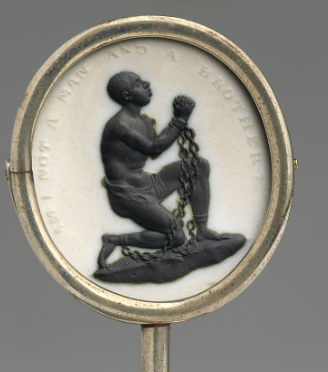 The abolitionists didn’t build awareness with brochures. They pinned a medallion on people’s chests that turned morality into fashion.
The suffragists didn’t worry about brand consistency. They flooded the streets in purple, white, and gold — a visual argument no speech could beat.
And when Norway was occupied by Nazis, citizens wore paperclips. An everyday object transformed into a silent, widespread, incredibly powerful act of defiance against the occupation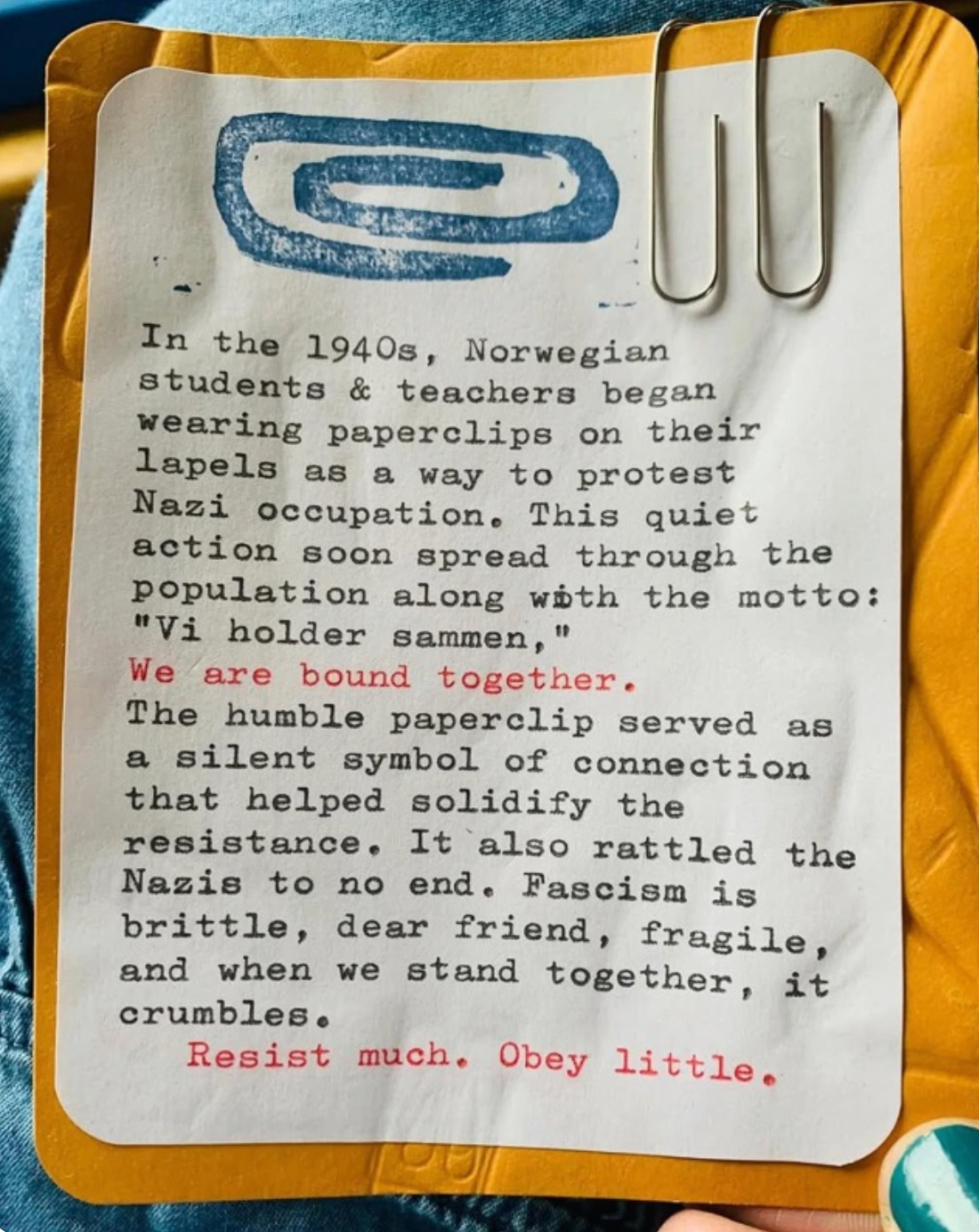 . It was a symbol of unity (“we are bound together”) and resistance that bypassed official communication channels entirely. It was subtle, dangerous, and profoundly effective. When people got arrested for wearing office supplies you know you’ve got a real symbol.
Fast forward to the ‘70s and on to today.
The peace sign escaped its creators and conquered the world. The red ribbon made AIDS impossible to ignore. The pink ribbon dragged breast cancer into daylight. The yellow Livestrong band turned donors into walking billboards of belonging.
 Sometimes the symbol even becomes the organization — the Red Cross being the gold standard. You don’t ask who they are. You run toward the mark. Or embrace WWF.
Now look at today’s protest. On No Kings Day, people didn’t march under nonprofit logos. They marched under crossed-out crowns. One glance: no tyrants here.
With Abolish ICE, three letters — sometimes slashed with a red prohibition symbol — carries an entire moral argument. No branding. Just meaning. Just identity.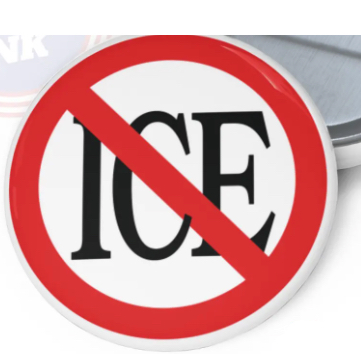
Meanwhile, nonprofits keep polishing swooshes, abstract shapes, stock-photo hands and faces all topped off with taglines no one remembers. Professional, respectable, invisible.
No one tattoos a logo or marches behind a color gradient, and certainly no kid doodles a brand refresh in a notebook margin. In fact, I’m thinkin’ that’s the real test: if a ten-year-old can’t draw it from memory, it won’t move a nation.
Here’s the powerful truth: symbols turn supporters into participants. Brands turn them into donors provided, as Kevin points out organizations are smart enough to invest and take the long view.
To put it another way: movements build belonging. Organizations build mailing lists and too often this translates more into the worship of legitimacy while ignoring the type of motivational power that scales great movements..
So here’s the question every nonprofit should answer before another rebrand: If your organization disappeared tomorrowwhat symbol would people still carry into the streets? Not your logo. Your symbol.
History seldom remembers organizations. It remembers movements, and it remembers them by the images that made people brave.
Roger
Behavioral Science Q & A
Thanks so much for raising this. Yes, capturing donor information can be helpful for stewardship like newsletters, thank-you letters, impact updates. But how you ask matters. Forcing full data capture introduces friction that can significantly depress conversion, many donors may simply abandon the process. Beyond the friction itself, required fields also shift the emotional experience […]
Read Full Answer
Unlike holidays that everyone already knows, Giving Tuesday is a created event. Many donors recognize the name but not the exact timing, so referencing it becomes a helpful cue. It serves as a reminder and taps into social norm activation (“everyone’s giving today”), which boosts response. However, we still want it paired with the mission, […]
Read Full Answer
When a subject line leads with the match (“Your gift matched!”), it risks triggering market-norm thinking: the sense that giving is a financial transaction rather than an act rooted in values, identity, and care. This shift reduces intrinsic motivation and, over time, can weaken donor satisfaction and long-term engagement. It also makes the email indistinguishable […]
Read Full Answer
There’s no evidence that QR codes suppress mid-value giving; all available research suggests they either help or have no negative effect. In fact, behavioral and usability research consistently shows the opposite: reducing friction at any point in the donation process increases completion rates and total response. And that has nothing to do with capacity and […]
Read Full Answer
What you’re experiencing is very common. Resistance often isn’t about capability, but about motivation quality. If board members feel pushed into fundraising, that triggers controlled motivation (low quality motivation) i.e. obligation, guilt, or fear of judgment, which often results in avoidance. Instead, we need to create conditions for volitional motivation (high quality motivation) by satisfying […]
Read Full Answer
That’s a really thoughtful question, and you’re not the first to raise it. Many of our clients have been cautious about placing the ask at the very end. To address their concern, we’ve tested both approaches, and the results are clear: when the ask comes last, even if that means it appears on the second […]
Read Full Answer