

When Concrete Stories Backfire
Most fundraisers have heard some version of this advice a hundred times: Be concrete, specific, make it tangible, show one child. Speaking of children, I find it useful to act like one (insert joke here) by asking, but why?
Why does being concrete sometimes work so well and sometimes fall flat? Here’s what we know.
When an appeal is concrete, it zooms in on vivid, emotionally resonant details—like a story about one child who needs breakfast tomorrow morning. This kind of message feels personal and immediate. It taps into our sense of loyalty and duty to help those who feel close to us, even if we’ve never met them.
When an appeal is abstract, it zooms out. It highlights the broader cause, ending hunger for all children, not just one. Abstraction reduces focus on any single case and promotes a more universal, impartial concern. It encourages donors to see all people as equally deserving of help.
That last distinction matters, because donors differ in how they see right and wrong.
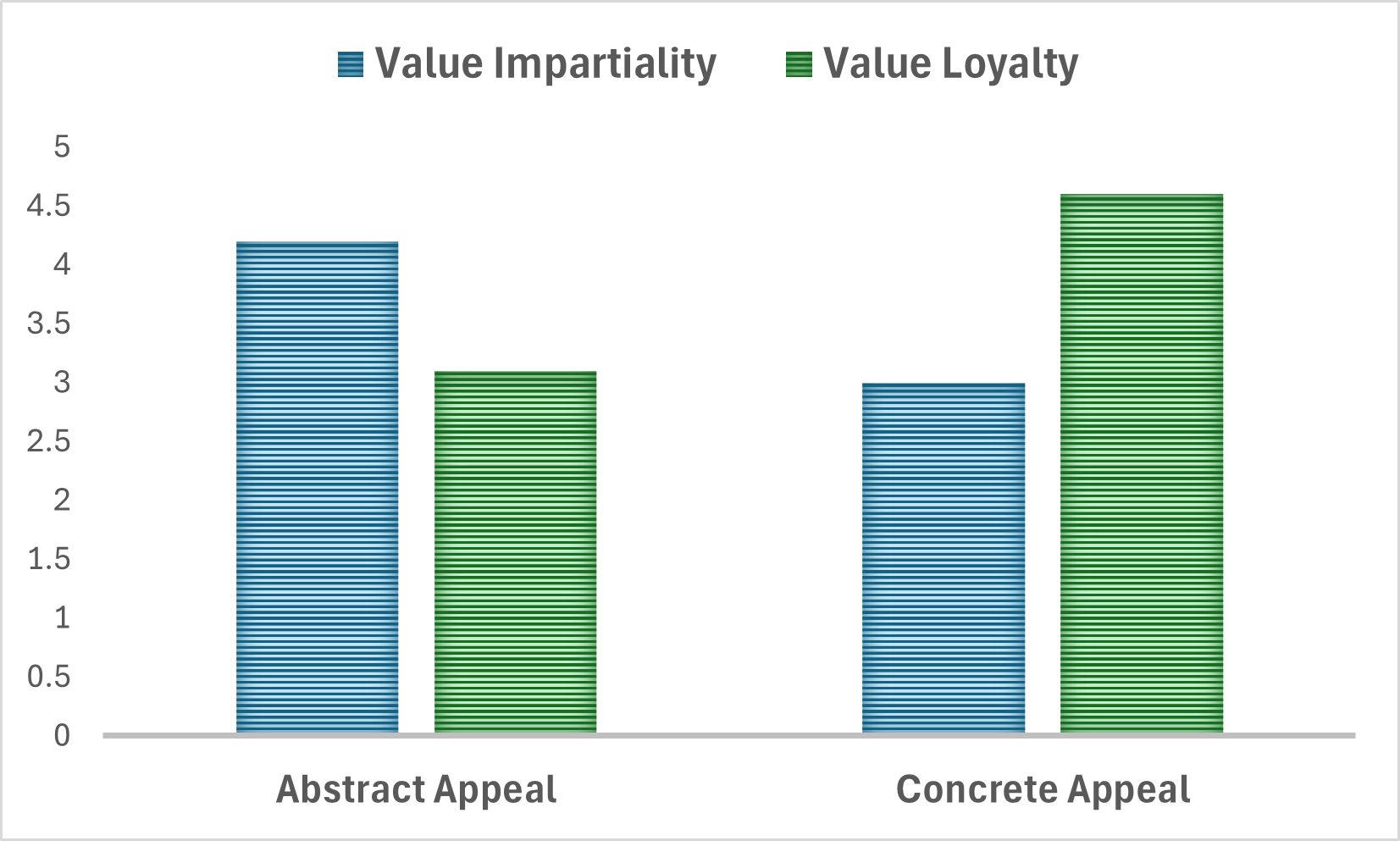
- Some donors are loyalty-focused. They feel a moral obligation to take care of “their own”—family, community, country. You can often spot them through personality: people higher in conscientiousness tend to hold this loyalty-driven worldview. A concrete story about one child will inspire loyalty-focused donors. The specificity feels real and trustworthy.
- Other donors are impartiality-focused. They’re motivated by fairness and universal care—helping anyone in need, no matter who they are. Higher openness to experience often signals this mindset and big-picture thinking. An abstract vision, ending child hunger everywhere, resonates with impartiality-focused donors who care about the broader cause more than any single example.
If you get this match right, giving goes up. Get it wrong, and your carefully crafted story can fall flat.
Across studies, the pattern is clear:
Why This Matters to You
Most fundraising programs still default to “best practices” like: “Always use a vivid, concrete story.”
The problem is best practice assumes everyone’s wired the same way but your donors aren’t interchangeable. The same concrete story to everyone guarantees some people feel inspired and others feel disconnected.
How to Get It Right
DonorVoice helps you tag your donors by Big Five traits so you can confidently segment messaging:
-
Abstract, big-picture appeals for high-openness donors who want to help humanity.
-
Concrete, specific stories for high-conscientiousness donors who feel responsible for their own community.
This is your path to treating donors like individuals instead of generic “best practice” targets.
Kevin
3 responses to “When Concrete Stories Backfire”
Behavioral Science Q & A
Thanks so much for raising this. Yes, capturing donor information can be helpful for stewardship like newsletters, thank-you letters, impact updates. But how you ask matters. Forcing full data capture introduces friction that can significantly depress conversion, many donors may simply abandon the process. Beyond the friction itself, required fields also shift the emotional experience […]
Read Full Answer
Unlike holidays that everyone already knows, Giving Tuesday is a created event. Many donors recognize the name but not the exact timing, so referencing it becomes a helpful cue. It serves as a reminder and taps into social norm activation (“everyone’s giving today”), which boosts response. However, we still want it paired with the mission, […]
Read Full Answer
When a subject line leads with the match (“Your gift matched!”), it risks triggering market-norm thinking: the sense that giving is a financial transaction rather than an act rooted in values, identity, and care. This shift reduces intrinsic motivation and, over time, can weaken donor satisfaction and long-term engagement. It also makes the email indistinguishable […]
Read Full Answer
There’s no evidence that QR codes suppress mid-value giving; all available research suggests they either help or have no negative effect. In fact, behavioral and usability research consistently shows the opposite: reducing friction at any point in the donation process increases completion rates and total response. And that has nothing to do with capacity and […]
Read Full Answer
What you’re experiencing is very common. Resistance often isn’t about capability, but about motivation quality. If board members feel pushed into fundraising, that triggers controlled motivation (low quality motivation) i.e. obligation, guilt, or fear of judgment, which often results in avoidance. Instead, we need to create conditions for volitional motivation (high quality motivation) by satisfying […]
Read Full Answer
That’s a really thoughtful question, and you’re not the first to raise it. Many of our clients have been cautious about placing the ask at the very end. To address their concern, we’ve tested both approaches, and the results are clear: when the ask comes last, even if that means it appears on the second […]
Read Full Answer
hi, so, the big question is, you don’t know what your donors respond to/what they’re like until you try both options? How else will you know?
Hi Erica,
I clearly need to be more explicit in making the sales pitch even though that isn’t the point of the post. The bit at the end of the post is the “how”. You give us your file, we turn it around in 48 hours through an entirely automated process, providing back Big Five trait scores along with cheat sheets and a workshop on how to tailor by trait.
In this case, that includes noting that the people high in Openness are more receptive to the abstract and those high in Conscientious, the concrete.
It’s $0.15 per record, no matter the size of file. You definitely don’t need to try both options, that isn’t the way to execute on this.
Hope that clarifies.
Great feedback. I like to give to organizations where I can see the tangible results of my gift. That’s when I know I’m getting an ROI